My Portuguese teacher made this claim to me so that we could discuss it and improve language learning. “Of course they do,” was my reply. That answer came automatically, without thinking, as if out of nowhere.
As I reflected on this later in my native language, I realized that, indeed, perhaps everyone always knows this, but the difficult part is distinguishing the knowledge, desires, thoughts, ideas, and goals of others from one’s own. And to distinguish others’ desires from your own. Perhaps the key isn’t what or whether, but how to access that information.
We all come into this world with an awareness (and I don’t mean intellectual awareness) of our role. So, on some level, we all know what we want, but we aren’t always able to describe it on an intellectual level.
The conversation with the teacher continued, and she asked, intriguingly, “But when will we know what we want if you claim that we all know, but simply can’t distinguish our own desires from the stories others have planted in us.”
It seems to me that we’ll find that out when we’re able to describe what we DON’T WANT. Having worked as a mentor for years, I’ve noticed that people have very clear convictions and plenty of words to describe what they don’t want. However, there are fewer words and less clarity when it comes to what they do want.
But if there is a “don’t want” part, then there is also a “want” part. This “don’t want” part brings out precisely those themes, desires, goals, aspirations, missions, and visions that others have taught me or that I have unconsciously adopted from others. And not just at work, but first and foremost, of course, during childhood—in the preschool years—when most of a person’s views on how life works are formed as a result of observation. That is when we learn “how things work.” We begin to cover our true nature with layers taught to us by our observations of the outside world, and our own will becomes buried beneath those layers.
I see this in the case of corporate burnout as well, where the search for oneself begins when it becomes clear that achieving the goals and objectives set by others doesn’t bring the joy and sense of fulfillment I was looking for—or, in other words, “is no longer in line with who I am.”
We all know what we want and what our role is here on Earth, but we need to remove the obstacles and layers that prevent us from seeing it. We often address the problem of “I don’t know what I want” in a superficial way, because we assume that we have to somehow learn this desire from an external source.
However, if we approach the periods when we’ve gone astray with the awareness that we always possess knowledge of our desires and actions, then we’ll look for it where there’s a chance of finding it—perhaps right where we lost it. So we don’t search in the dark for something right under the lamp—because it’s bright and convenient to search there—but rather we look where it disappeared to.
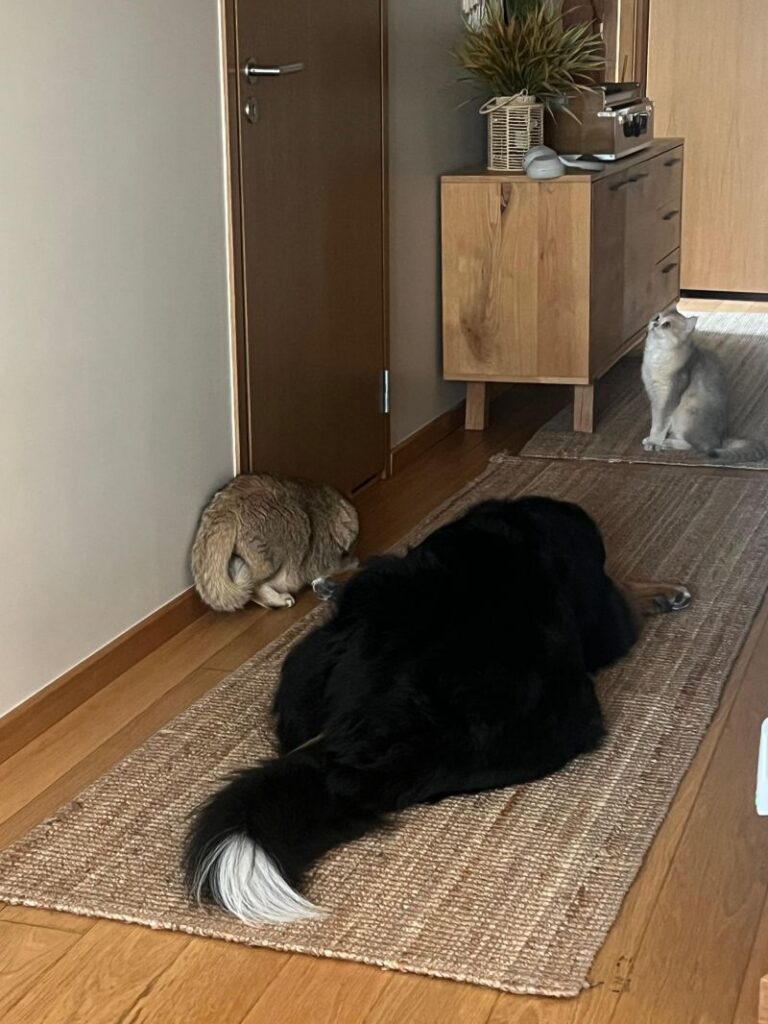
The photo shows my three pets, who, for example, are very determined to go into the bedroom 🙂