A few days ago, a client used the following phrase to introduce himself: “I usually need to see the big picture, and then I dive into the details.” That got me thinking about how much of the big picture we’re actually able—or willing—to see. And where is the line between the big picture and the really big picture?
In the workplace, the “big picture” usually refers to an organization’s strategy, goals, industry, or economic trends. Sometimes we even expand this to a global scale. But even a global perspective is still a big picture on the scale of human beings and planet Earth—a conceptualized and institutionalized big picture.
For me, is the “big picture” about viewing all of existence as a whole? For example, recognizing that life constantly moves through a rhythm of creation, preservation, and destruction or decay. These forces are at work in nature, in organizations, in relationships, in societies, and within ourselves, regardless of the words we use to describe them.
The word “energy” may sound esoteric to some, even though we use it in a completely everyday context. We pay for electrical energy, and we talk about running out of energy or being full of energy. We are surrounded by phenomena and forces that we cannot see ourselves, but whose effects we experience constantly (all of our phone calls and chat messages are energy around us that moves invisibly through the air). We don’t have to fully understand everything to acknowledge this: humans are neither the center nor the controllers of everything that happens.
That same client later said something to me that also stuck with me: “Ivar, you’re between earth and heaven, and you’re able to make sense of and interpret both for me.”
Perhaps that is exactly what I mean by “the big picture.” The ability to keep both feet on the ground while at the same time not reducing reality solely to what we can measure, control, or rationally explain.
We tend to think quite highly of our ability to influence things. Life, however, consistently reminds us that we are also subject to larger processes. This doesn’t have to be called God, the universe, or energy. The question is rather whether we’re willing to acknowledge that our explanation of the world is not the world itself.
Perhaps seeing the big picture really does begin right there, and yet it cannot be explained, because thought itself and words are, in turn, more limited than our broader perceptions.
P.S. I wrote this text off the cuff, just as it came to me, and then had the AI edit it down to make the point clearer and remove any repetitions. It wasn’t allowed to add anything. By the way, I invite other writers to note how AI has been used in LinkedIn posts. Making the invisible visible!
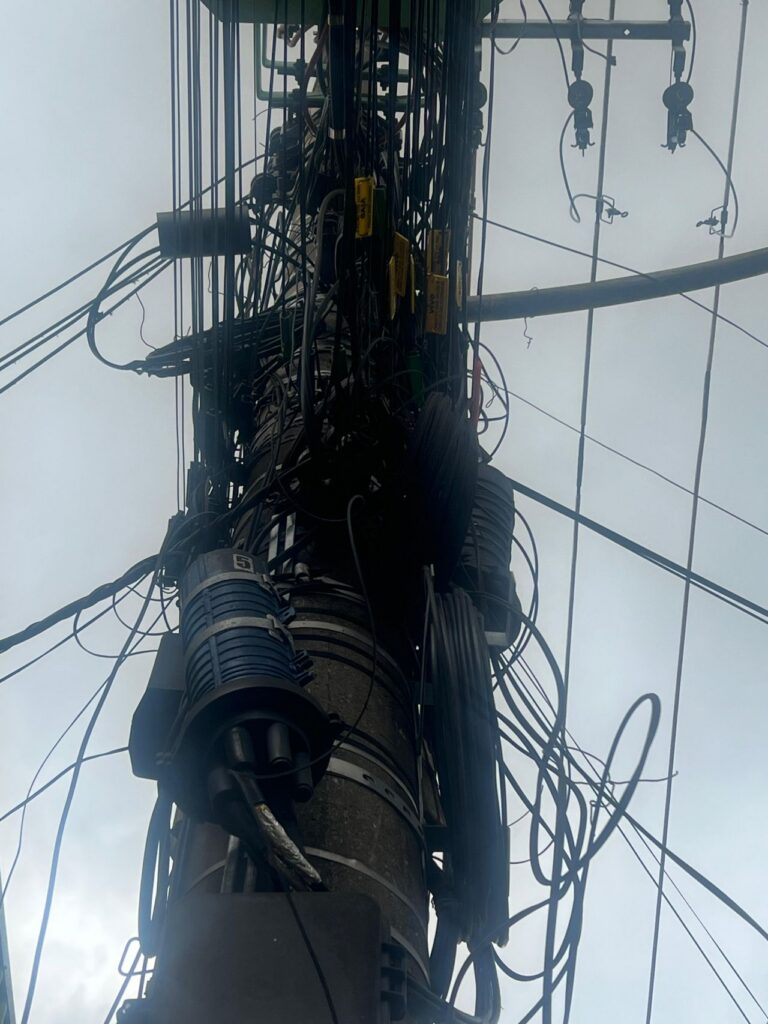
P.P.S. The picture shows one visible energy cluster, which serves as a good illustration of the invisible energy clusters that exist within us, between people, and all around us.