An acquaintance said something like that a few days ago after listening to my audiobook. Since the book was published in print several years ago, but I recorded the audio version this spring, I found myself wondering, having just gone through the text again, what he meant by that.
Based on earlier feedback, the book’s central idea, that a leader’s primary task is to make himself or herself unnecessary as quickly as possible, and that a leader should not remain in that role for more than 2–5 years, seems to be the “most dangerous” one. I still believe this, and I think that making managers’ employment contracts temporary would solve a number of problems (it would increase cohesion, independence from managers, initiative, accountability, etc.).
I received very long and heartfelt letters during the publication of “The Footprint of Leadership” from those who had begun to see through the lines the inherent emptiness and inhumanity of the corporate system and who had set out to find new solutions either within the system or by (temporarily) stepping outside of it. That was probably the “I love” part, because there was a lot of recognition of corporate culture and the dark side of the corporate religion for those who had experienced it. Of course, one could also hate the book for exposing that very corporate emptiness. After all, who would want someone to step on their toes and expose the fact that the ideal pursued by the system and the goals it demands don’t actually bring happiness? That’s just a tiny fragment of your happiness; the rest of life must still be more important.
However, none of us can completely opt out of this system. Even if we ourselves do not work for any “corporation,” nearly all of the services and products we consume are built on the same corporate logic. Money is simply a very important part of how our societies function.
We can’t change the system, but we can always change how we view it—and decide whether to let the system control us or to take control of it ourselves and create something new.
Many of my clients are people whose main job is to learn the rules of the game (after all, so-called management techniques are just a set of rules for playing the “system game”) and not to take them too seriously, but to see that true value lies precisely in relationships, understanding, in the joys and sorrows of being human and experiencing life.
And one more thing that has made quite a few leaders furrow their brows over the years—yet without embracing this idea, groups of leaders have still been unable to take the next step within the organization: “A leader’s Team No. 1 is not the team of his or her direct reports. His or her Team No. 1 consists of other leaders at his or her own level.”
Because the moment a leader starts prioritizing the protection of “his own people,” a “us” and “them” mentality, silos, and little fiefdoms very quickly emerge within a single organization. This, too, initially sparked what you might call resentment, but after some reflection, it led to new insights.
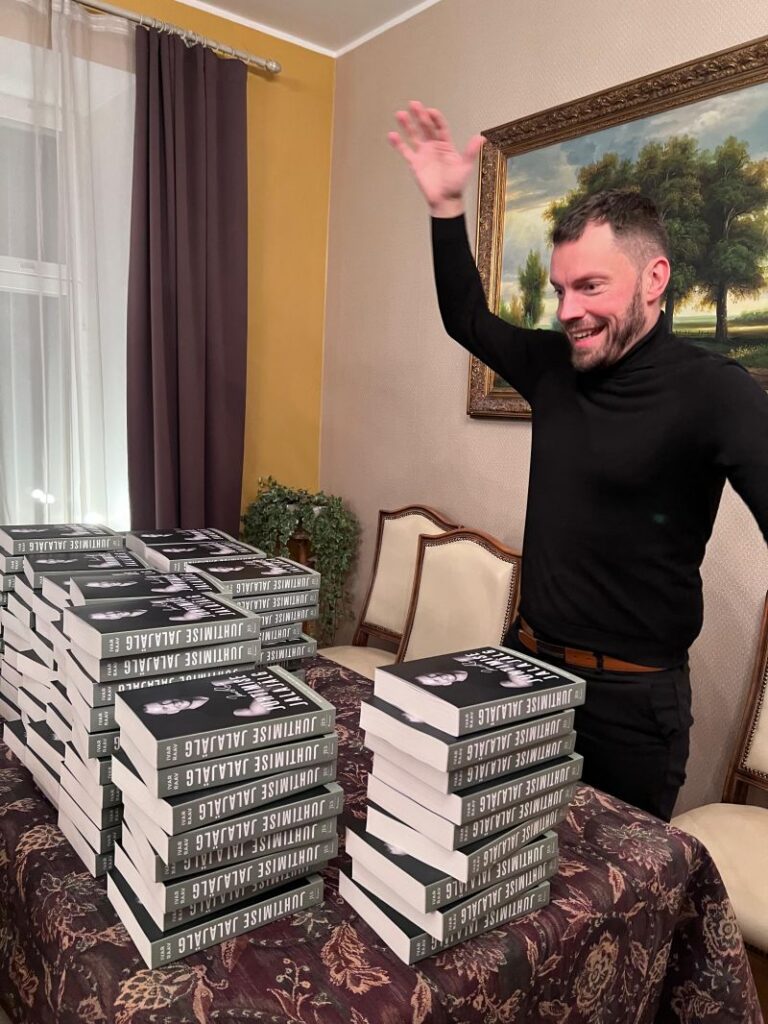
The photo shows the moment when the first books intended for signing arrived at my home. Oh, and a new book is coming out this fall