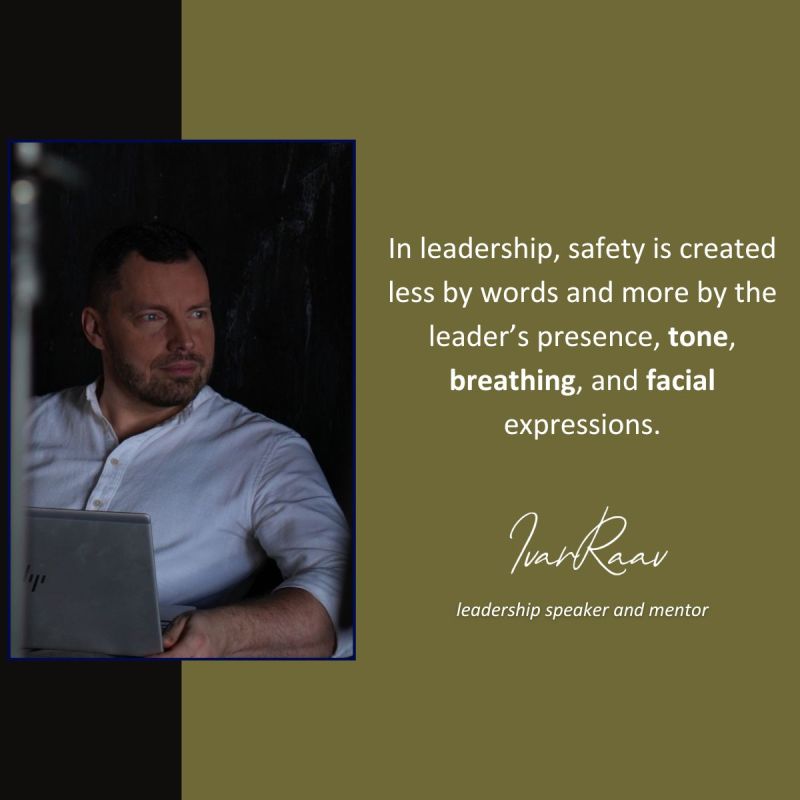
I have seen that people in organizations respond to much more than what a leader says. Of course, words matter, but…
Leaders can invite openness, encourage honesty,and speak about trust all they want. But if the emotional atmosphere in the room tells a different story, people will respond to that deeper signal long before they respond to the message itself.
This is why psychological safety is such a subtle thing. It is not built only through the right phrases or good communication techniques. It is also shaped by what the leader carries into the room without even realizing it.
The pace of their breathing, the level of tension in their body, the way they react with their facial expressions, the tone etc – all of this becomes part of the leadership experience, whether it is named or not. If those “traumas” what are triggered from the past in work situation have not touched and inner reactions calmed down (I don’t use word “solve”, as past traumas is not possible to “solve”), those will lead for the leaders more than all the fancy techniques she/he has learned in expensive leadership trainigns.
I have seen leaders sincerely ask for openness and still create caution around themselves. Not because they were manipulative or insincere, but because their nervous system was communicating something else: urgency, defensiveness, impatience, or a need to stay in control.
And people notice that. They may not describe it in those words, but they sense it. Some less, some more, but they do. As a result people become more careful, share less.
This is why I find it increasingly difficult to reduce leadership to tools, actions and behaviours alone. A leader may have all the right intentions and still shape a climate where honesty becomes … expensive for employees.
Not because they lack skill, but because deeper unnamed pressure has taken over their presence.
For me, this has become an important question in leadership: not only what is the leader saying, but what happens to other people when this leader enters or leaves the room? What change in the atmosphere?
That question often reveals much more than the formal message ever will.