In a previous post, I wrote about why today’s way of managing is increasingly exhausting people and no longer works. I wrote about why the problem is no longer with the individual, but with the pattern. Inevitably, the question arises: what to do when the system doesn’t work? In practice, there are three options.
1️⃣ Push forward to
This is probably the most common option. Pace is kept up, people are motivated, replaced. There is talk about resilience and stress tolerance and the need to keep raising it. The results come for a while and it works until key people leave, creativity disappears, decisions become short-sighted and the organisation becomes emotionally numb. On the outside everything seems fine, but on the inside the system starts to slowly break down, results suffer, etc. Perhaps the option is to accept the inevitable.
2️⃣ Soften without changing
A more voluntary but more insidious option, with the addition of wellbeing programmes, mental health packages, internal communication with “we care” messages. The pace, tempo and expectations will remain the same, because that’s the way it’s been and that’s inevitable. A paradox arises where the person is supported but the system that is wearing them down remains intact. In the long run, cynicism and a loss of trust are born.
3️⃣ Question the system
The rarest and, of course, most inconvenient option. Often the choice is made for us by our body, which at some point can no longer cope. But in the case of a conscious choice, it is up to the leader to ask: what is really necessary and what is habit or adaptation? Where do speed and real impact get mixed up? Which expectations are historical and automatically taken over but no longer justified? Where does the system require people to constantly reinvent themselves? This path means slower decisions at the start, awkward conversations, sacrificing a few ‘sacred cows’ and, of course, redefining the role of the leader and endless arguments with the people he has met. But it is from here that lasting results are born (not just measurable results, but results that support the development of human virtues), viable teams and organisations that do not burn out every few years only to become another number in the mental health crisis statistics.
But most drivers do not KNOWINGLY choose either the first or the second option. We just don’t see that the third is even possible or we don’t choose it and so we choose option 1 or 2.
As a driver myself, I’ve made choice 3 and seen it work. Not in the short term, but in the long term. It’s very exhausting precisely because it requires swimming against the current (especially in the machinery of big corporations), but it changes the way we work together and then the outcome.
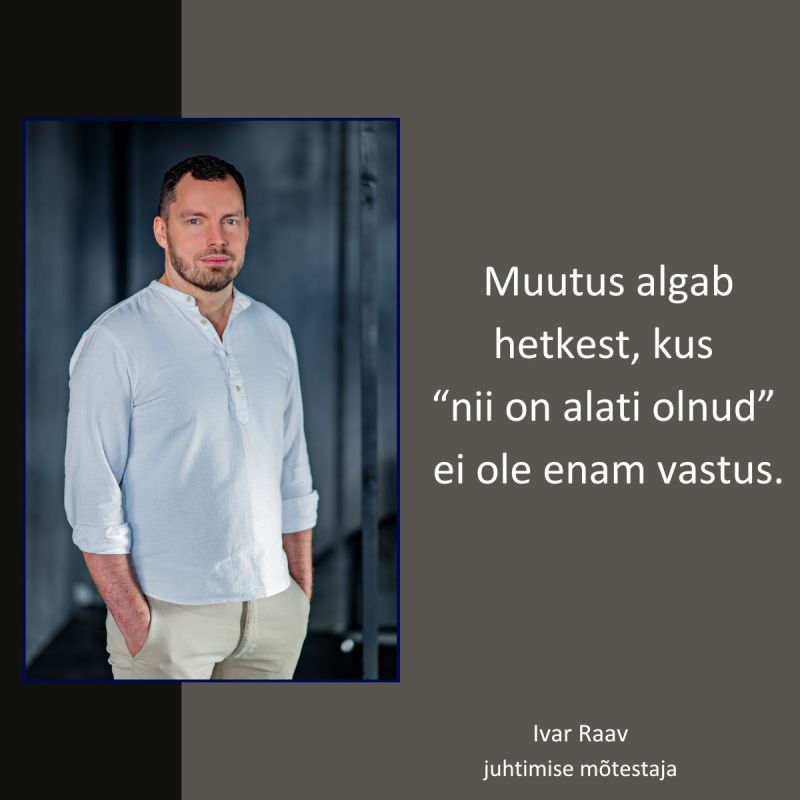
Real change doesn’t start with tools, it starts with the courage to question the so-called ‘normal’. Because that’s not really how it’s going to be any more, as we’ve been doing. Or can we?