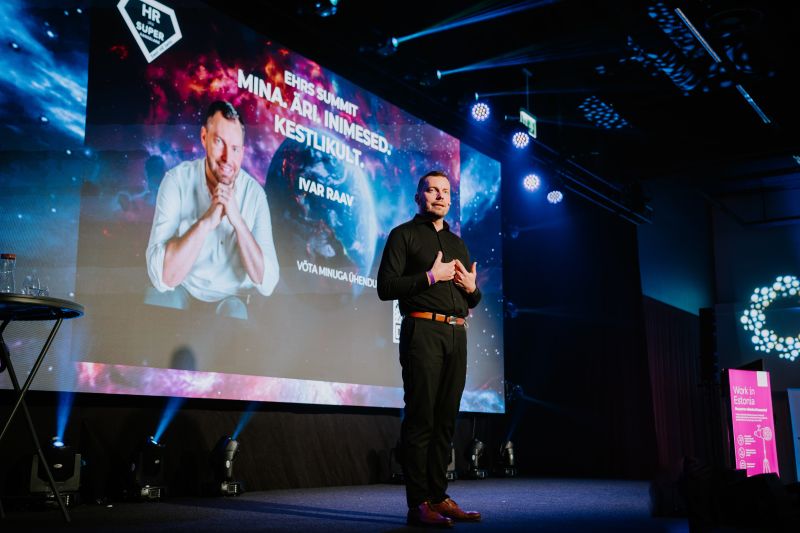
In the morning, I stood in front of 700 HR professionals. In the evening, in front of 800 people, singing in a choir.
In the morning I said: leadership development, as we practice it today, does not necessarily create healthier organizations. Too often it sustains performance systems that quietly produce burnout, fear and emotional disconnection from life.
Earlier that day, someone said from the stage: “Emotions do not belong in the workplace.” That sentence stayed with me. It genuinely affected me. Because when emotions are pushed out, something essential in being human is pushed out as well. We lose human being as a holistic creature.
We speak about self-leadership as if it is new. Seven years ago, when I built my company around that idea, it was considered soft and impractical for many. Now many use the language. Yet structurally, very little has changed.
Same tools.
Same frameworks.
Same pressure patterns.
So what did I speak about?
– That organizations mirror the inner state of leaders more than they mirror strategy decks. That when deeper meaning disappears, ideology fills the gap, including corporate ideology. And ideology tends to turn into battles about who is right.
– That HR professionals and leadership trainers influence far more than competencies. They shape what kind of human being is rewarded and promoted. We build the future society, humanity if to say big.
– That constant action in corporate life is often fear in motion. We label it ownership, urgency, accountability. But when fear drives the system, it simply creates more fear.
I began my keynote with silence.
700 people.
No phones.
Complete stillness.
It was uncomfortable, but needed.
We are used to movement. Movement creates the feeling that things are under control. But control and clarity are not the same thing. Control is just an illusion. Like all the autocratic systems have failed in one moment, because they start to believe that everything is under control. It never is. Clarity is coming from silence, from not having practical action.
Later that evening, standing in the choir, I felt the same underlying question: what kind of country, organization and humanity are we building? A choir works because individuals listen. They adjust. They create harmony instead of competing for volume.
Leadership is not primarily about the next practical tool. If we want different outcomes in society, we need to examine what we reward, what we normalize and what we quietly tolerate in leadership cultures.
Organizations shape society. Leaders shape organizations.
Who shapes the leaders – and based on what values and virtues?
That is the work I care about.