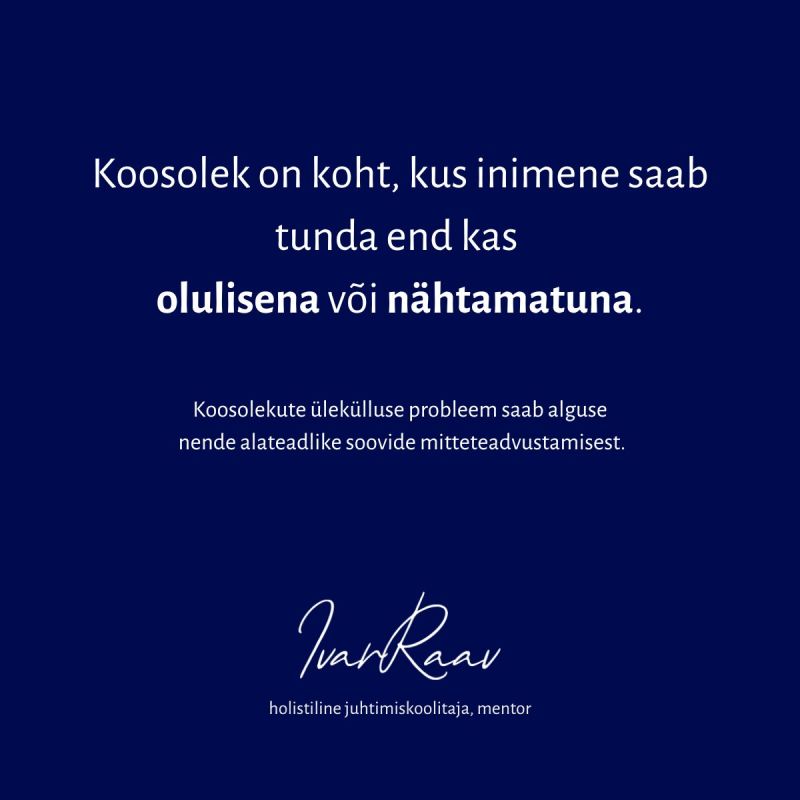
Too many meetings and not enough good practice documents for meetings?
If a person spends more than 20% of their time in meetings, Peter Drucker says, the organisation is sick. I agree.
Meetings are often held in order to “keep the pulse beating”, “share information”, etc. But often a meeting is a way to escape from oneself and one’s responsibilities. The more and bigger the meetings, the smaller the individual becomes.
Conviviality is a symptom of a system where a sense of security is sought in action, not presence. A system where being fast has become a source of identity and pride – the winner is the one with more Teams links in the calendar, fewer lunch dates and more burnout experiences.
But the question is deeper: do we meet to create something or to avoid the emptiness and fears that arise in silence and reflection?
Two simple but tricky practical steps:
– Create a gap in your calendar. Less than 20% of working time in meetings – more time to think, listen and see the big picture.
– Look honestly at what you avoid in meetings. Often there is a fear of loneliness, judgement or inadequacy.
Of course, getting to these two requires an awareness of something that is invisible – the meaning of work, acting/being, fears and insecurities, and much more.
But if an organisation wants to make a real difference, it needs to start changing not the number of meetings, but their meaning. Yet another ‘good practice’ of meetings will not work if the meaning at a deep level is unconscious.
Meeting is a compound word for meeting+meeting. It can only create value when people are in touch with themselves and ready to be there, together. And you don’t make that change through processes. It is done through awareness.
When meetings become a ritual, not a real thing, it’s time for a change. Not in the calendar, but in consciousness. This is the work I do with leaders in one way or another every day – to make being together a value-creating, not ritual avoidance behaviour.