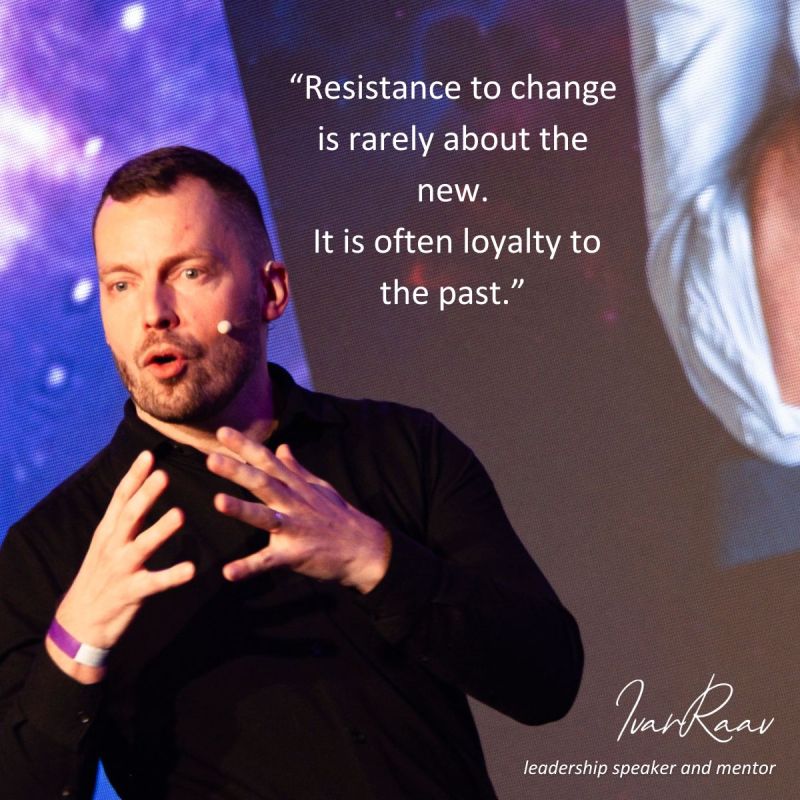
Most people think others are against the new idea, but in many cases they are simply loyal to something that came before (the past). Someone might resist a new process because “this is how our founder did it.”
Another might question a new leader because they still feel loyal to the previous one or the one they wanted to be selected to the position. A team might reject a new strategy because the old one once made them proud within their social circles. They might protect culture they joined (e.g. startup mindset vs corporate mindset).
So the question is often not “Why are people resisting and how do we overcome this?” – which is unfortunately a typical focus in many change management programs.
A more useful question might be: “What are they loyal to?”
Leaders can open this conversation with a few simple questions:
1. What in the old way was actually good and worth respecting?
Maybe the old system created trust, speed or strong teamwork. Grief process is needed to go through.
2. Who or what are we still loyal to?
A former boss, a past success, a way of working that once saved the company, an old culture, owner? When we make things visible we can start to deal with this and grief and respect the past.
3. What do we want to carry forward and what can we leave behind?
When the past is acknowledged, resistance softens. People don’t feel that they are betraying something important, and then movement becomes possible. Being seen is one of the most basic human needs.
And by the way the people who try to move the organization forward and saying things like “there’s no point talking about the past, let’s focus on the future and solutions” are often the ones who face the most resistance.
Because loyalty is work connected to the past. In many ways, it is almost therapeutic work. And as this might bring up some emotions, we tend to ignore it and “moving forward to the future”. This kind of approach have given us a lot of tension in the organizations and societies what comes visible usually through anger, rage and anxiety.