Because action creates a sense of control which of course is often just an illusion. Meetings multiply, messages intensify, urgency and stress fill the air. It feels like everything depends on what we do next.
And of course, action is necessary. But there is something I’ve repeatedly witnessed in large organizations: when a crisis breaks out, different leadership levels start asking for different reports.
The board wants one overview.
Top management wants another angle.
Middle management needs operational updates.
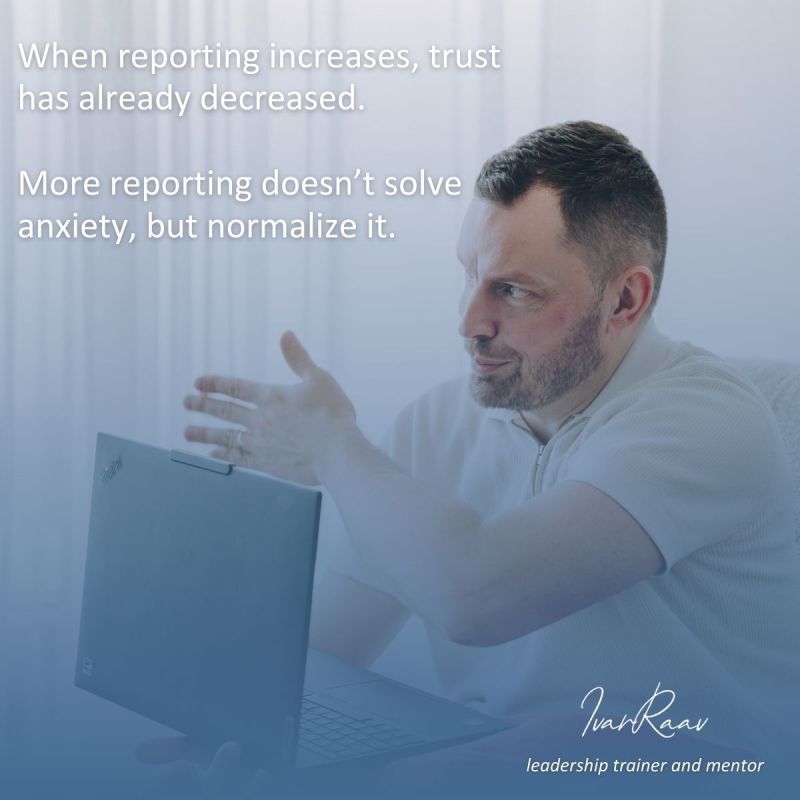
Within days and sometimes even hours something interesting happens: time spent on actual problem-solving decreases and time spent on reporting increases. Work gets replaced by reporting and focus by crisis meetings.
With every new summary, dashboard and escalation call, emotional pressure rises. Because now you are not only solving the issue, but you are constantly explaining it to different levels and roles.
But here is the deeper layer. Organizations don’t escalate only because of external events. They escalate because leaders escalate internally. Unprocessed fear spreads very fast.
Lack of trust multiplies control and inner uncertainty turns into external urgency. Crisis often amplifies what was already there. The visible problem is rarely the real problem.
Very often the crisis reveals misalignment in the leadership team, unspoken tension, trust issues, unclear ownership, avoided conversations – all the things that have been replaced with “annual reviews” and other formal processes instead of real dialogue.
It’s critical to take time once the initial urgency has passed (and that shouldn’t take more than 3-5 business days) to analyze the root causes behind the technical issue: the culture of the organization or leadership teams.
To understand why we are outsourcing anxiety into reporting structures. To notice what deeper pattern is surfacing through the crisis. When we dare to address that layer calmly and stop feeding the symptom we start resolving the cause.
And that is where leadership truly begins.
Going deep enough to shape the culture and the environment is the real source of strong business results.
Everything else is just basic 1990ies type of management: reacting, repeating what we already know and wondering why the same crises keep coming back.
And often this approach need an extra pair of eyes from the outside. If you need them, let me know, I would love to jump in and dig deeper with you.