In business, there are moments when someone breaks an agreement, breaks trust or clearly does the wrong thing. I often see an internal decision emerge afterwards:
“I have to be right.”
From that moment on, the situation is no longer controlled, but the situation takes control of the person and the matter is lost in the pursuit of justice. Life gets out of hand.
The disputes, the lawyers, the meetings, the months and years begin. Time, money, energy and peace of mind are lost.
Externally, we call it standing up for justice. Internally, it is often the need to restore dignity. The need for someone to say: “You were not stupid. You were not weak.”
This need does not usually arise in today’s context. It comes from a much earlier time in a person’s life. A time when there was no justice, no boundaries and you had to stand up for yourself. In mentoring or therapy sessions, I often see that the roots go much deeper than that (right back to where we come from – childhood). Generally, for these people in life, the situations of chasing after entitlement recur.
In business, this pursuit of entitlement is particularly acute, because business is about status, identity, self-worth through money.
In my book, I describe Karpman’s Drama Triangle as a subconscious pattern
that is activated when fame, power and money are at stake. It’s an automatic program that a large proportion of people live in – to automatically choose a role that is either saviour and helper of all; victim or sufferer; or aggressor/controller.
In the victim-aggressor-saviour dynamic, there is a contest between who is to blame, who should be ashamed and who is right. In essence, justice is being contested at the cost of wasting life and not living.
When shame is activated, justice becomes a weapon and peace begins to feel like surrender. But this is where an important mistake is often made. Peace is not the opposite of justice. Peace is the opposite of drama, which consumes life energy.
I’ve seen how the cost of a dispute outweighs the initial damage, how an organisation gets stuck in the past for years and the focus shifts from growth to self-satisfaction. Oh the ego meetings of middle managers that I have attended as a manager and witnessed from the sidelines as a consultant. They are not malicious of course, because they have activated old stories and traumas. Particularly those who live in the mindset of ‘no point dealing with the past’.
The relevant question is not “Am I right?”
The relevant question is: “At what cost will I achieve that right?”
Will this price create peace and clarity or will it prolong the old pattern until another situation like this happens in my life and I can spend my life arguing and playing victim-aggressor-saviour again.
Sometimes, of course, boundaries need to be set (including in court). But a mature leader will be able to distinguish between defending the system and ‘healing’ a wound from the past.
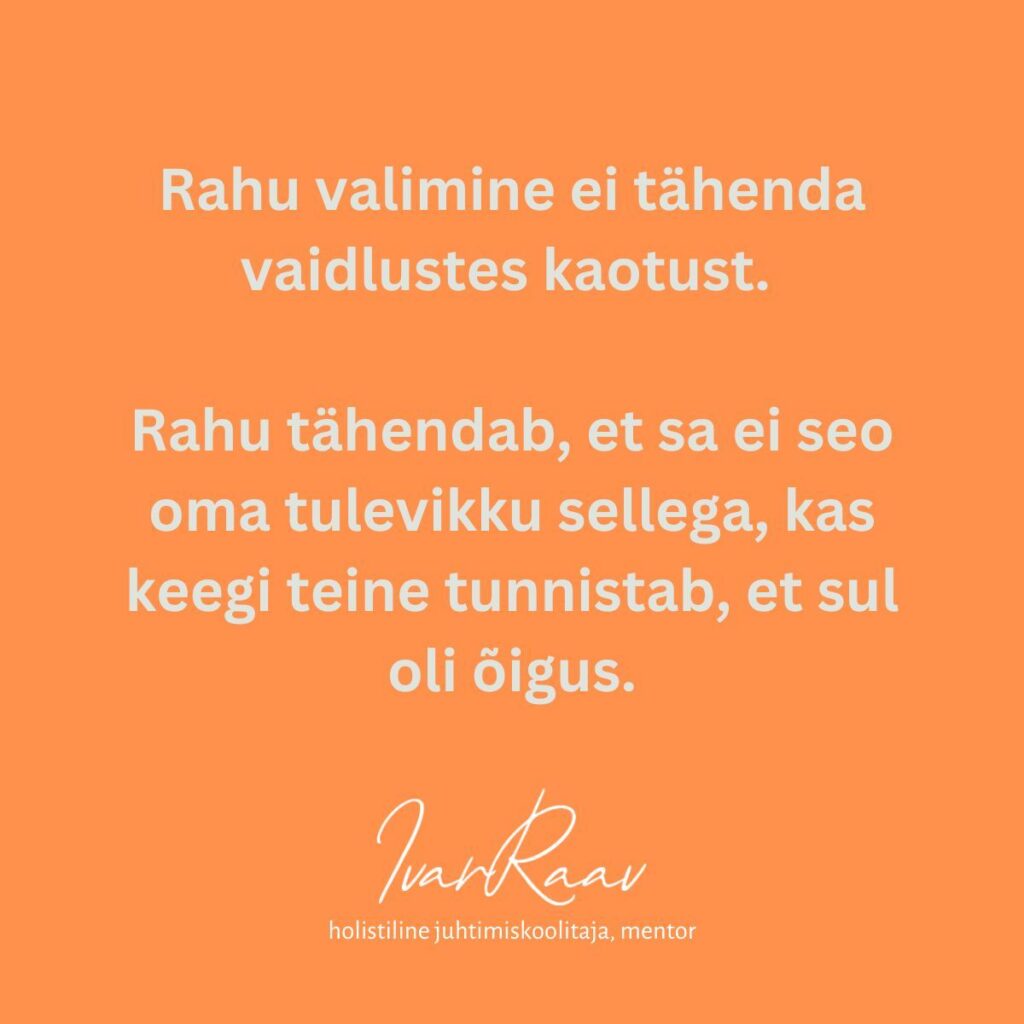
Choosing peace does not mean defeat. Peace means you don’t tie the future to whether someone else admits you were right.
And sometimes that is the strongest leadership decision you can make – to choose peace to create a new future, rather than fighting the past or illusions about the future.