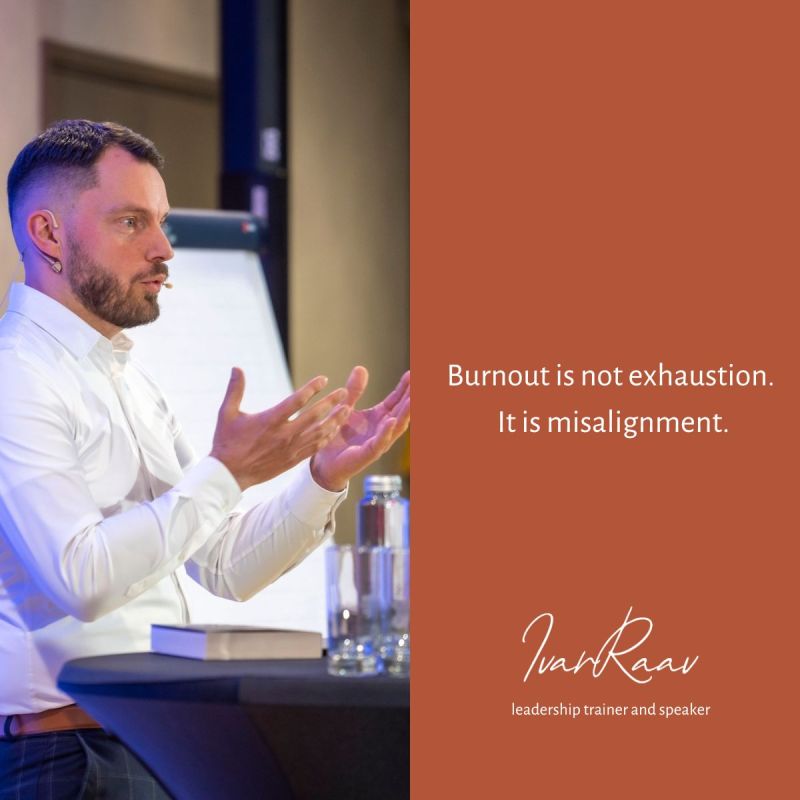
If it were, every high-performing leader would be burned out. Burnout is more often a long-term inner conflict – a slow separation from yourself.
For example:
– You say yes when something in you says no.
– You speak about strategy while your body tightens.
– You lead change while quietly resisting it inside.
For a while, performance compensates, and people push through, optimize, and become even more efficient. But efficiency cannot compensate for misalignment forever. Burnout begins when the distance between who you are and how you live becomes too large.
It is not weakness or poor stress tolerance. It is often the consequence of living out of alignment for too long.
Organizations treat burnout as a capacity issue.
Reduce workload, add recovery or offer well-being programs. But if the inner conflict remains, the exhaustion returns. I haven’t seen many examples of people returning to their previous role after burnout.
Because the body does not burn out from work alone, but from divided loyalty, from serving expectations that are not truly yours or from proving something that should not need proving.