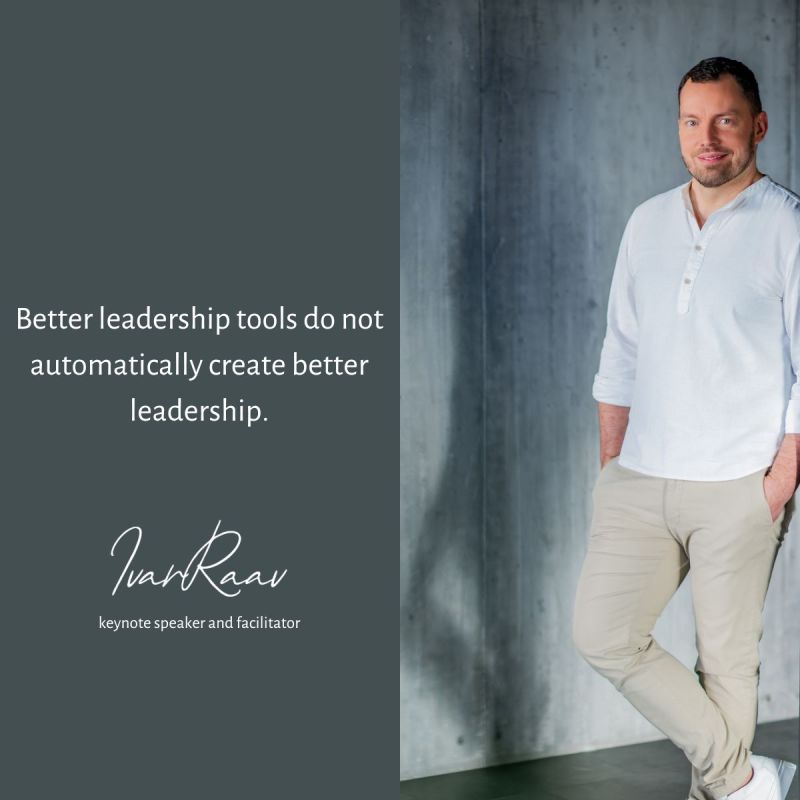
“How to… ” type of leadership development tools can create structure, clarity and a shared language, but they do not fully explain why two leaders can use the same model, follow the same process and still create entirely different cultures around them.
This is the part that has interested me more and more over the years. Because at some point it becomes difficult to avoid a deeper question: if the tool is the same, what is it that actually creates the difference?
My own experience has led me again and again to the same place. Leadership does not begin with the tool. It begins with the inner state of the leader using it. A leader who carries fear into the room shapes a different culture than a leader who brings clarity. A leader who avoids tension influences a system differently than one who can stay grounded when conversations become uncomfortable. The process may be identical, but the human reality underneath it is not.
This may be one of the reasons why so many leadership challenges do not disappear even when organizations invest in better methods or leadership trainings where deeper layers are not touched. The visible layer improves, but the deeper patterns often stay untouched.
And that is where leadership becomes interesting to me. Because in my experience, leadership begins exactly where the usual tools start to lose their power: in the inner world of the leader, in the level of awareness they bring into the room and in the often invisible dynamics they transmit into the system around them.
People respond to what leadership embodies, not only to what leadership says.