And yet, if we are honest, much of what has been called “working in business” ironically does not seem to be working that well anymore anyway.
Why else are so many leaders exhausted and why are organisations constantly worried about people, pressure, performance and survival after all those “wonderful” tools we have invented and used?
Not long ago one of my clients who is member of a leadership team in business organization said something that stayed with me: “No matter how much we keep pushing, using all the methods, the results still seem to decline little by little over the years. There have to be some other issue there what is not approachable with classical methods.”
That sentence captures something many organisations feel but struggle to name: people are trying, doing a lot and still something essential does not shift. That is often the point where people find their way to me, because they know that my approach to leadership is really different. But from people who are not my clients, I have occasionally heard this sentence through others: “His approach won’t work in business.”
Usually, I do not think that reaction is really about business. It is often a reaction to my view that leadership begins not with tools, but with the leader’s inner state, unconscious patterns, self-awareness and ability to work with human consciousness, including what I would call spiritual leadership.
And yes, sometimes that criticism may be fair, but often something deeper is going on. Because if a deeper approach to leadership really works, then sooner or later something old has to go: a role, a defence, a habit, a way of controlling or a way of avoiding discomfort.
That is why it can feel safer to say it is too soft, too vague or unrealistic. Perhaps what is needed now is not more automatic resistance, but more openness to the possibility that our whole way of looking at leadership may need to change.
Many great thinkers have pointed to the idea that reality is not only material, mechanical and visible, but also energetic in nature. The fact that something is quickly labelled as “voodoo” today does not mean it is not real. It may simply mean that we do not yet know how to relate to it in a grounded and mature way.
So instead of automatically resisting the possibility that there are greater forces or unseen dynamics at play in human systems, perhaps it would be wiser to become curious and learn to understand them better. Because denying something does not make it disappear. It only delays the moment we are finally ready to see it.
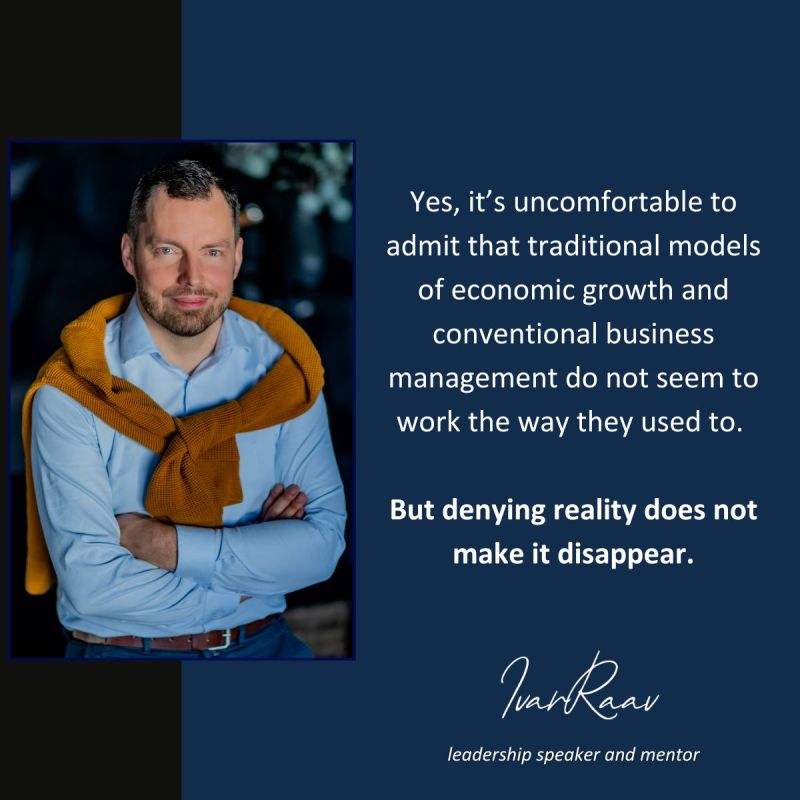
I know it is super uncomfortable to see and admit that classical leadership tools, traditional models of economic growth and conventional business management do not seem to work the way they used to. But denying reality does not make it disappear.